Dragonboat Sprint World Championships

In Hungary, the dragonboat race is held in end August at Szeged while the Chinese celebrates the dragon boat festival called 端午节 Duānwǔ jié=Dragon Boat Festival in June


Maty-ér Regatta Course, Szeged, Hungary
Date: 27 - 29 August, 2010
Events: The competition programme includes 27 events of the regular Dragonboat Sprint World Championships programme in 20-seater boats as you can see the details below.
The new 10-seater events will also be introduced in Szeged so three additional senior competitions will be organized (men 200m, women 200m, mix 200m).


端午节 Duānwǔ jié=Dragon Boat Festival


The focus of the Chinese celebrations includes eating the rice dumpling called 'zongzi', drinking realgar wine, and racing dragon boats. It was believed to be related to the suicide in 278 BC of Qu Yuan 屈原 Qū Yuán, a poet and statesman of the Chu kingdom during the Warring States period. 
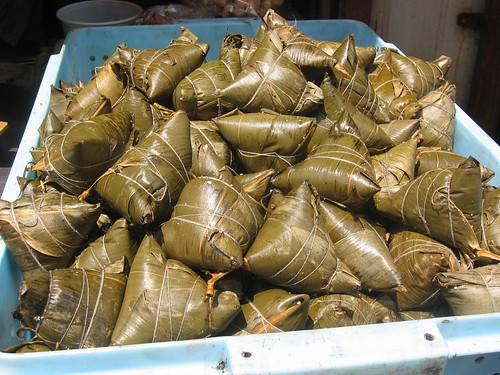
On the fifth of May of lunar calendar, 屈原 QuYuan killed himself by jumping into the MiLuo River. After his death, one of his townsmen had a dream. He dreamed that QuYuan was thinner than before. His villagers and himself made 粽子 zòngzi by wrapping glutinous rice with reed or bamboo leaves. Then, they loaded the 粽子 zòngzi  on dragon boat and dropped them into the river. 

端午节吃的粽子
These are the dumplings wrapped in bamboo leaves


---
Lovelinks

Strokes Exercise


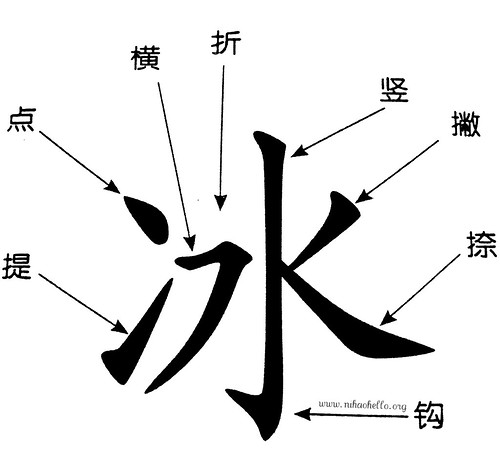
A stroke is a movement of a writing instrument where the nib is touching the page.

The Eight Principles of Yong (永字八法 yǒngzì bā fǎ) uses the single character 永, meaning "eternity", to teach eight of the most basic strokes in Regular Script. This one in the diagram is 冰 which means 'ice' :)


There are general guidelines for writing, for example:-


1. Write from top to bottom, and left to right. 三-order.gif
2. Horizontal before vertical 十-order.gif
3. Character-spanning strokes last 聿-order.gif
4. Diagonals right-to-left before diagonals left-to-right 文-order.gif
5. Center before outside in vertically symmetrical characters 水-order.gif
6. Enclosures before contents 回-order.gif
7. Left vertical before enclosing 口-order.gif
8. Bottom enclosures last 道-order.gif
9. Dots and minor strokes last 玉-order.gif


Basic Chinese strokes can be learnt by practicing at your home. The strokes are mainly:-

The dot

Horizontal stroke

vertical stroke

throw stroke

right-falling stroke

rising stroke

turning stroke

hook stroke


In our chinese basic course, you will also get to learn how to write. For more information, email: nihaojodee@gmail.com


---
Lovelinks

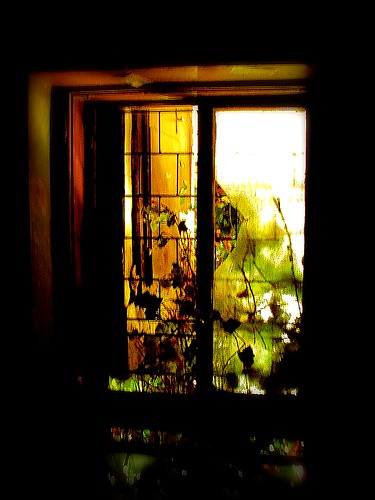
window=窗 chuāng


Originally uploaded by zannnielim

In architectural terms, it is built on the wall or roof holes, to make light or air into the room....

在建筑学上是指墙或屋顶上建造的洞口,用以使光线或空气进入室内。

---
Lovelinks

Umbrella - sǎn


To protect from rain and it is usually waterproof. Umbrellas are almost exclusively hand-held and portable; some people use it like fashion accessories.

---
Present ideas

Curious Chinese Csütörtökön | 好奇汉语星期四

Csütörtökön means 'on Thursday'. So on every Thursday, this segment will feature and highlight something chinese :)


Actually the Chinese doesn't like the number 4 too much. This is a taboo number.

Do you know why the Chinese likes the number 8 and not the number 4?
Come back and find out on next Thursday, 2nd September!
curious chinese

好奇汉语星期四
 Curious Chinese Csütörtökön


Water Polo=水球 shuǐ qiú

Waterpolo =水球 shuǐ qiú


The water polo competitions at the 2008 Summer Olympics in Beijing was held from August 10 to August 24 at the Beijing's Ying Tung Pool. Medals were awarded in both men's and women's tournaments. Water polo in chinese is 水球 shuǐ qiú


Here's a Beginners' Level Lesson Preview about the character 'Water' in water polo.


Twelve teams competed in the men's water polo competition 2008.

Group A  Australia  Canada  Greece  Hungary  Montenegro  Spain  

Group B  China  Croatia  Germany  Italy  Serbia  United States


---
Lovelinks


Our Chinese Lesson Structure - Part 3

3. Texts

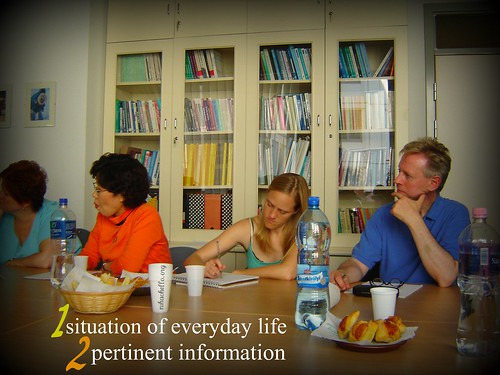
Readings of various kinds are included. From all new grammar presented, these readings incorporate both the basic situations of everyday life and the most pertinent information regarding the Chinese environment.
Reading
Several types of regular exercises recommended and encouraged:-
a) Oral:- reading the text aloud
            - text summary with the help of questions
            - asking questions concerning the paragraphs of the text
            - discussion of the contents of the text

b) Oral and written:
            - dramatisation of the text
            - dialogues transformed into descriptions or narrative speech
            - alteration of persons, time and place, etc
            - replacement of words, expressions and grammatical forms with synonyms or equivalents
            - present-day application of the topic

Courtyard=四合院 sì hé yuàn


四合院 sì hé yuàn is a courtyard surrounded by four buildings, is a basic pattern of residence commonly found throughout China in older times, but most famously in Beijing.

Our Chinese Lesson Structure - Part 2

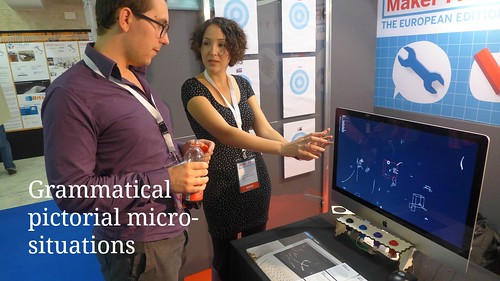
2. ''Grammatical-pictorial micro-situations''
Introduction of new grammar and drills practice is carried out primarily with the functional method of  ''Grammatical-pictorial micro-situations''
Grammatical-pictorial micro-situations

Structures and patterns are introduced and drilled and where necessary, are provided with equivalents or explanations  in English. Learners at *Intermediate level and above will be explained in Mandarin Chinese.

First Club Med in China - Yabuli


In November, northern China's ski centre in Yabuli will host the country's first Club Med. In accordance with new company standards this will be an upscale resort. It might also become the French company's beachhead in China.


Madinina South

Our Chinese Lesson Structure - Part 1

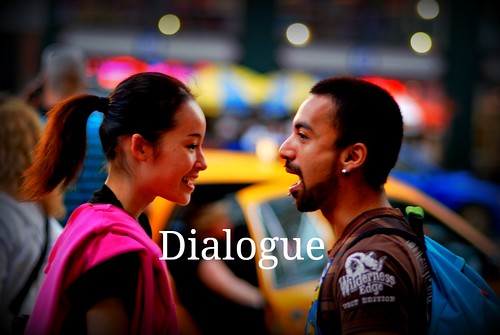
1. Dialogue
In the Yard


A Short Conversation Accompanied by Pictures
Introduction of new elements and  application of previously learned ones in everyday situations.

Dialogues also serve as exercises:

Example: To participate in a dialogue using questions and answers formed by the learner:
- possible variations and adaptations to similar situations
- narration of the conversation in a descriptive manner
- a written recording of it
- an oral recording of it

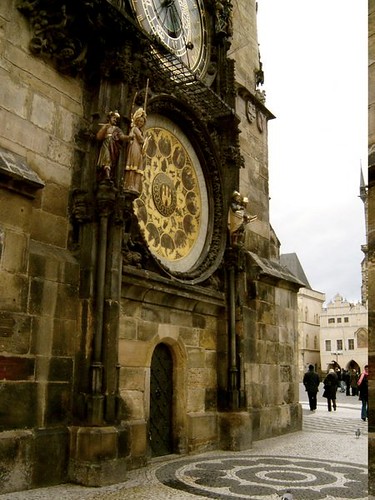
Prague = 布拉格 bù lā gé


Originally uploaded by zannnielim

布拉格 bù lā gé is Prague. It is the capital and largest city of the Czech Republic. I love this place, it is like a fairy tale came true to me :) The entire atmosphere is just beautiful, very calm and I really love Prague.

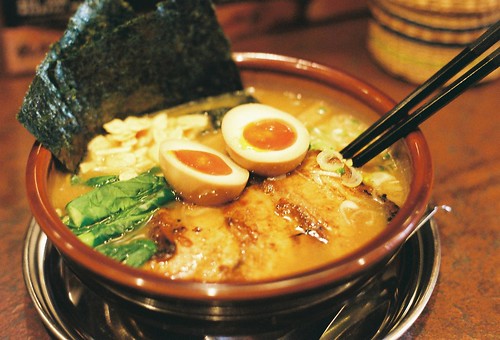
拉面浴 lā miàn yù = Ramen Bath


Originally uploaded by bobby stokes
拉面 lā miàn, word by word it means ''hand-pulled noodles''. Ramen soup is generally made from stock based on chicken or pork, combined with a variety of ingredients such as kombu (kelp), katsuobushi (skipjack tuna flakes), niboshi (dried baby sardines), beef bones, shiitake, and onions, and then flavored with salt, miso, or soy sauce.

The video up next is about ''Ramen Bath'' in Japan. It does not only increased the pleasure of the bath, but also beneficial to health and the role of a clean skin.

拉面浴
在日本的一家浴场,时新人和拉面共浴。浴场经理表示,"拉面浴"不仅增加了人们洗浴的乐趣,还有益于身体健康,并且有清洁皮肤的作用。


---
Fancy dress

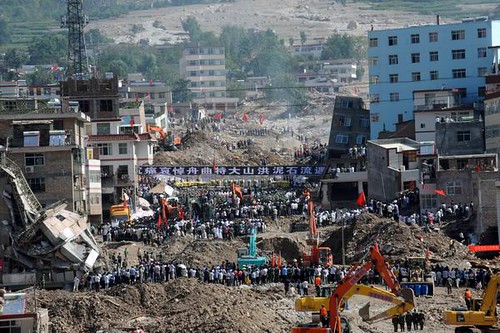
哀悼 āi dào=mourn


Originally uploaded by turtle5001tw


哀悼舟曲泥石流遇难者

Chinese Arts=中国艺术 Zhōngguó yìshù


Chinese handicrafts are very beautiful and popular with distinctive national features. From furnishings to household items, many have distinct ethnic characteristics. Handicrafts include the following categories: Ceramic, woven handicraft, sculpture handicraft, lacquer work, metal handicrafts and woodwork.


Great Museums China: West Meets East at The Metropolitan Museum of Art


Artists and craftsmen from different periods and dynasties have created many valuable items with their clever hands and consummate skills. From the painted pottery and jade in the Neolithic age to the bronzes of the Yin and Zhou dynasties, the lacquer work of the Spring and Autumn and the Warring States Period, china from the Tang and Song dynasties, cloisonné from the Ming and Qing dynasties, Chinese handicrafts boast a very long history.


---
Fancy dress

Chinese Lessons for Children


Spurred by the economy of China, the Chinese language is becoming an increasingly popular language to be learned by many around the world. The developing and influential market economy has dubbed Chinese language as 'the language of the future'.

China is the third largest economy in the world after the U.S. and Japan with a nominal GDP of US$4.4 trillion (2008) when measured in exchange-rate terms. It is the second largest in the world after that of the United States with a GDP of $7.8 trillion (2008) when measured on a purchasing power parity (PPP) basis. China has had the fastest-growing major economy for the past 30 years with an average annual GDP growth rate above 10%.

invest in your child

For parents, one of your best investment in securing your children's future is providing them with an opportunity to learn the Chinese language at an early age. Not only does it help to lay a foundation, our chinese program for children develop their communicative competence while they are having fun in the process.

---
Pirate fancy dress

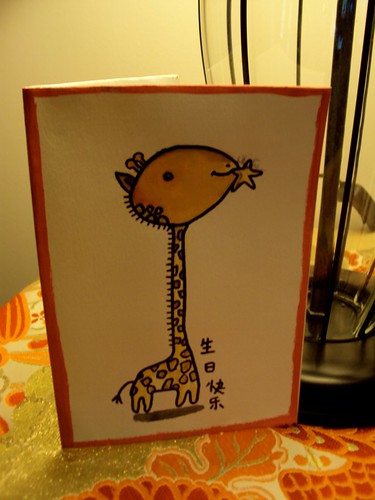
生日快乐=Happy Birthday in Chinese


Originally uploaded by zannnielim


生日快乐

生 = birth
[shēng]

日 = day
[rì]

快 乐 = happy
[kuài lè]

---
Halloween costumes 

海阔凭鱼跃,天高任鸟飞 | 谚语=Proverb


Originally uploaded by zannnielim
意思是说:大自然的广阔无边为鱼跃鸟飞提供了宽广的空间,可以引申为替人才提供施展才华的空间是多么重要,也可以理解为拥有自由是那么的可贵。

Our imagination is the only limit to what we can hope to have in the future. - Charles F. Kettering

---
Halloween costumes 

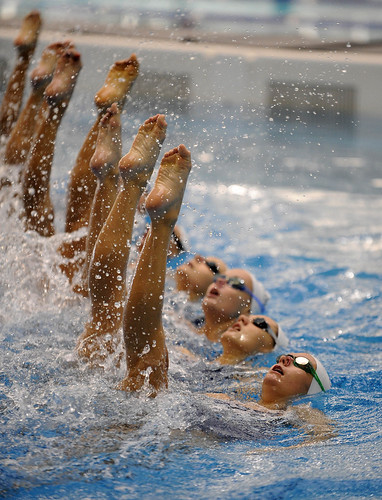
花样游泳=Synchronized Swimming


Originally uploaded by Alan Place


Synchronized swimming includes swimming, gymnastics and ballet made of various techniques blend with dance performances and art forms one of the women's swimming program, also known as the "Water Dance", the sport and the need for adequate basic health quality, strength and dance skills.

花样游泳,即包含游泳、体操和芭蕾等各种技巧糅合而成的具备舞蹈表演和艺术造型的女子游泳项目之一,又被称为“水上舞蹈”,该运动项目,同时需要足够的身体基本素质、力量和舞蹈技巧。

China Travel TIPS: Arrival in China


Originally uploaded by zannnielim

Arrival in China

Upon your arrival in China from abroad, you have to go through the following procedures, just as in other countries. To save time, you will be given some forms to fill in on board before landing. They include the Entry Registration Card, Health Card and Custom Luggage Declaration Form.

- Health check
On arrival, the first check you have to pass is the Quarantine Check. At the check point, you show your passport and the form you filled in on board. Anyone with listed diseases such as yellow fever, cholera, VD, leprosy, infectious pulmonary tuberculosis or AIDS will be forbidden to enter or be sent to the airport clinic for further checking. Those who are from areas with epidemics must show their valid certificates of inoculation against this disease. Those with symptoms of fever, diarrhea, vomiting or rashes must declare this information accurately.

For those who are going to stay longer in China, they have to show their quarantine certificate issued by an authorized health department abroad.

- Border entry
After passing through the Health Check, you come to the border control area (equivalent to the immigration control in the West) where you show the officer your passport and the Entry Registration Card. Your passport should be valid with a visa to China. Without a valid visa, you will find it difficult to enter the country. China does not issue visas at the border upon your arrival from abroad.

- Customs
After collecting your luggage, you will pass through the Customs. There are two channels, red and green. If you have nothing to declare, go through the green channel, otherwise take the red channel.

If you take things listed on the Customs Luggage Declaration Form in the red box such as computers, cameras, video cameras, gold and silver, printed or recorded materials, or anything more than you need during your travel in China, or something that you will not take out of China when you leave, you have to fill in the Customs Luggage Declaration Form which you are given, and then take the red channel where the Customs officer will check it to see whether you have to pay duty or you have to deposit the things at the Customs, or whether you can take them into China but have to take them out on your departure.

Please keep the stamped form with you and do not lose it, because you will be asked to give it back to the Customs officer for checking on your departure. If you do not take out all the things that you have brought in but you filled in the form, you will probably be asked to pay duty.

Twitter Delicious Facebook Digg Stumbleupon Favorites More

 
Design by Free WordPress Themes | Bloggerized by Lasantha - Premium Blogger Themes | Facebook Themes